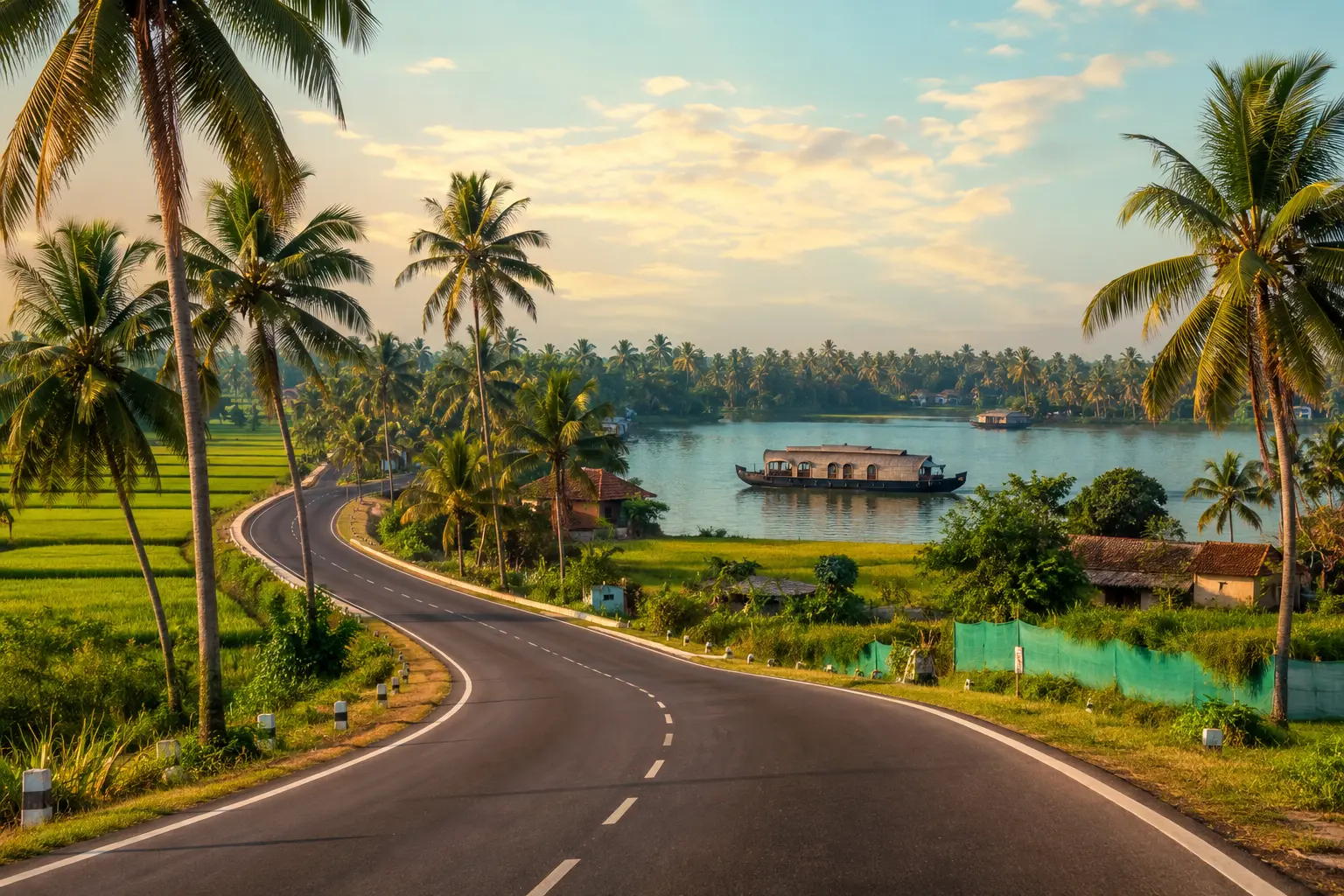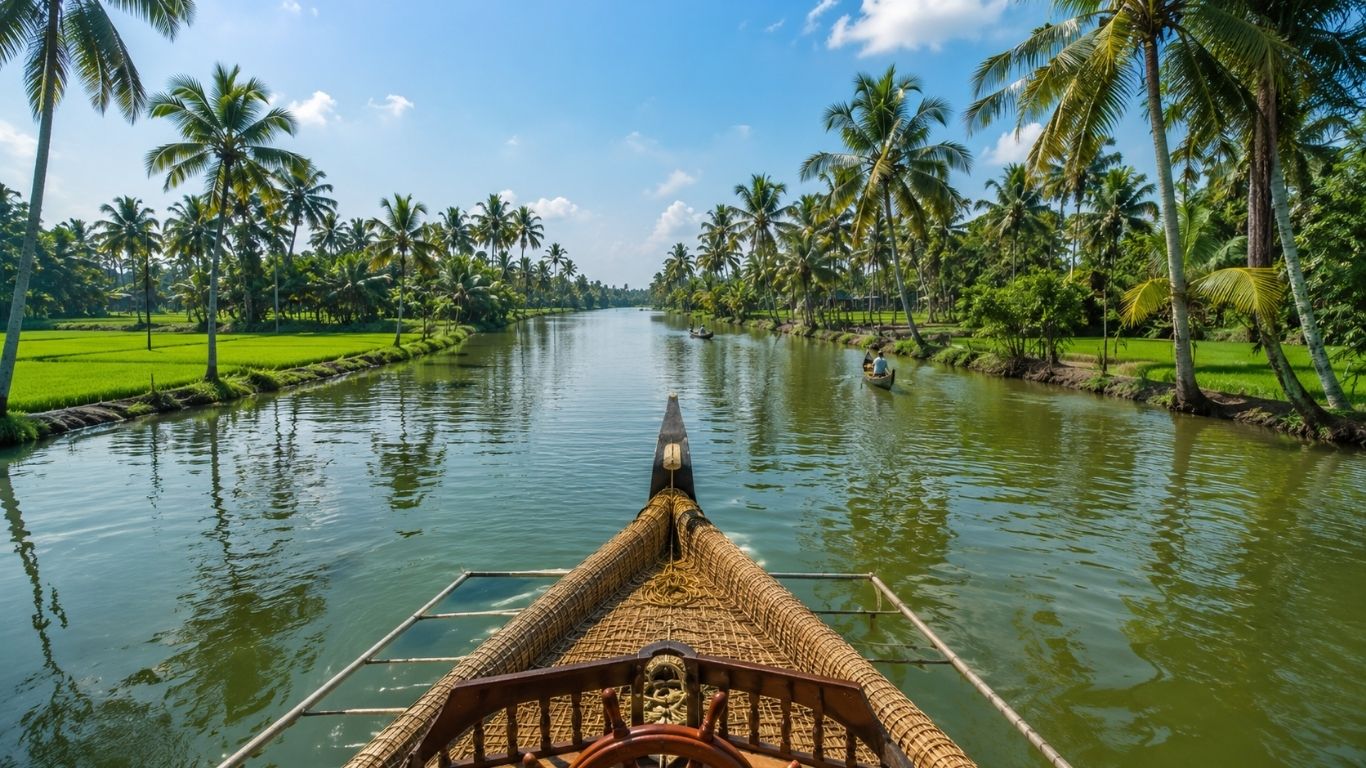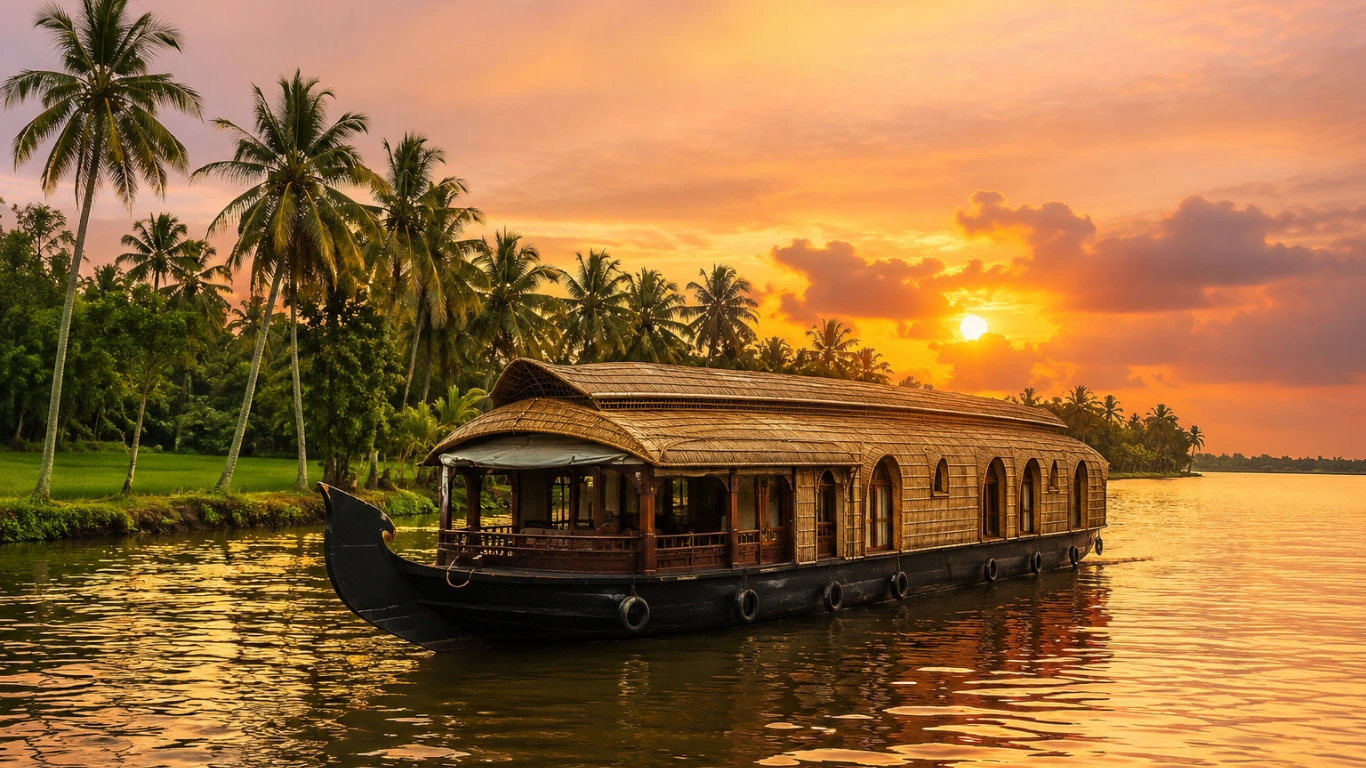
The stunning backwaters of Kerala are undoubtedly one of the biggest attractions of India, and among the elements of this fascinating touristic experience stands out the unique Kerala Houseboat. While today houseboats represent luxurious means of transport for enjoying the tranquility of God’s Own Country, their role was much different several thousands of years ago. At that time, these vessels represented an indispensable means of carrying loads throughout the rivers, lakes, and channels of Kerala.
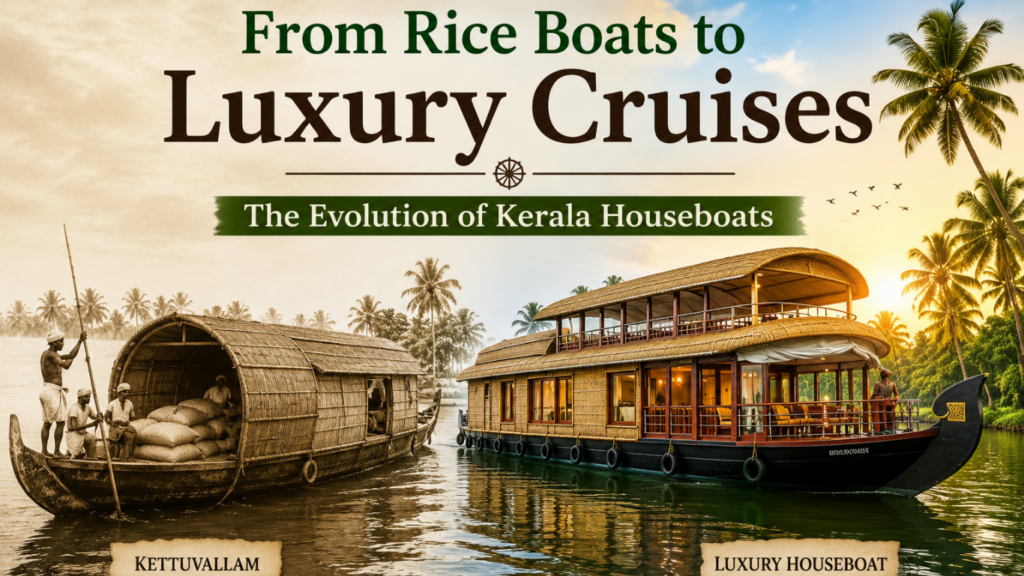
The evolution of Kerala houseboats is a fascinating tale of transformation. These boats evolved from transporting rice and spices via Kettuvallams into floating palaces filled with luxurious facilities. The historical account of these boats helps us gain great insights into the lifestyle of the people of Kerala’s backwaters over centuries.
Kettuvallam – Roots and Evolution
A typical Kerala house boat is referred to as Kettuvallam, which in Malayalam means ‘tied boat.’ The name itself gives away something about the special construction process used in building Kettuvallam. While all other boats were nailed together, in Kettuvallam wooden planks were sewn together with coir rope.
It is believed that Kettuvallam have been sailing on the water channels of Kerala for over one thousand years. The backwaters formed the main means of transportation during the era of antiquity since villages were better connected with each other through waterways rather than the roads.
These ships greatly facilitated the lives of people from the nearby villages since they served as a means to move cargoes over great distances.
Traditional Building Techniques
What makes houseboats in Kerala interesting to study is their environmentally friendly building techniques. Craftsmen made use of organic material that was abundantly available in the locality.The following materials were used to make traditional Kettuvallams:
- Anjili wood
- Bamboo rods
- Rope made from coconut fiber
- Palm leaves and bamboo mats
- Cashew nut shell oil for water proofing
The wooden boards were lashed together using coconut rope, forming a strong but flexible design that would endure for many years. The exterior was sealed using natural sealers that would protect the craft from water damage.A usual capacity cargo Kettuvallam ranged anywhere from 60 to 100 feet long and could carry multiple tons of cargo. The bamboo that formed the arching roof protected the cargo from the rain and sun, giving the craft its signature design.
Houseboats and Trade in Kerala
Traditionally, Kerala has been one of the main centers of the international spice trade. Pepper, cardamom, cinnamon, cloves, and many other spices would be shipped from interior areas to the ports where the trade took place.The Kettuvallams were of great importance for this economy as farmers from Kuttanad, known as the Rice Bowl of Kerala, used these boats to take rice that they had grown to Alappuzha, Kochi, and Kollam. Coming back from their voyages, the boats would bring salt, cloth, and other items to the rural areas.
These backwaters were the highways of Kerala prior to modern transportation development. The entire population was dependent on the Kettuvallams, as boat makers, merchants, workers, and transport providers relied on these boats for their survival.With trade booming, the art of building these boats gained recognition for its excellence. Areas such as Alappuzha and Champakulam became known for crafting some of the best Kettuvallams in Kerala.
The Decline of Cargo Boats
The middle part of the twentieth century proved to be an important phase in the development of Kerala’s houseboats. With the increasing presence of roads, railways, bridges, and even motorized means of transport, the dominance of water transport started to diminish.Trucks provided faster transportation services, thus decreasing the requirement of cargo boats. During the 1950s and 1960s, most Kettuvallams had become unprofitable due to which the orders started declining.Several cargo boats were left to decay at the river banks, whereas others became ferries. It seemed that the ancient art of making Kettuvallams was becoming extinct.
The Birth of Houseboat Tourism
The revival of Kerala houseboats came about in the early nineties when tourism officials saw the opportunities that could arise from utilizing houseboats as special accommodation facilities.Traditional Kettuvallams, which originally carried cargoes, were refurbished into passenger ships complete with sleeping areas, bathrooms, and observation platforms. The combination of the two elements generated immense interest among both domestic and foreign tourists.The picturesque backwaters of Kerala, combined with the use of traditional boats as means of transport, made it a special package of tourism in its own right.
Evolution into Luxury Floating Hotels
Initially, the facilities provided by tourist houseboats were fairly basic. But as their popularity soared, providers upgraded their facilities to offer more to the guests.In today’s time, luxury Kerala houseboats are equipped with facilities like:
- Air conditioned bedrooms
- Bathrooms with luxurious facilities
- Large dining space
- Balconies
- Wi-Fi facilities
- Entertainment systems
- Exclusive chef services
High-end houseboats have multiple bedrooms, private sun-decks, Jacuzzis and even on board spa treatments. These houseboat resorts give a luxurious touch to the traditional Kettuvallam.Kerala houseboats today can easily be counted amongst the most luxurious cruise options available in the world.
Environmental Issues and Sustainability
The rise of houseboat tourism has presented certain environmental problems as well. The increased number of boats along with waste problems and water pollution have been posing certain difficulties with regard to the backwater ecosystem.To counter these environmental issues, the Kerala government has imposed certain regulations to encourage sustainable tourism practices. Some of the measures taken include:
- Solar power generation system
- Biotoilets
- Water treatment plant
- Green building material
- Low emission engine
Importance of Houseboats of Kerala to Its Culture
Not only do Kerala houseboats contribute to tourism, but they are also an icon of culture and engineering. These are manifestations of years of skills and knowledge related to trade and survival.To the locals, backwaters continue to play an important role in their lives, where fishermen, farmers, and other people still use these water channels in order to survive.Thus, by taking a houseboat tour, one can enjoy both stunning natural scenery and unique culture.
Conclusion
Nowadays, Kerala houseboats symbolize creativity and pride of traditional boat makers along with the magnificence of the backwaters. Adopting sustainable methods and policies of tourism, the Kerala houseboat industry continues to sail the waters, carrying on with centuries of Kerala culture and tradition.
Are you ready to be part of the fascinating history of Kerala’s backwaters?
Come aboard with Rajadhani Houseboats in Kumarakom and enjoy one of the best ways of discovering the magnificence of Kerala backwaters.